The East African Community (EAC) is finalising its Artificial Intelligence (AI) Strategy (2026–2031), championed by the East African Science and Technology Commission (EASTECO). Far from being a technical policy exercise, the strategy focuses on how AI can be applied in practice. It is already influencing how food is produced, how patients are diagnosed, how businesses make decisions, and how governments deliver services. These applications, however, need to move beyond fragmentation and uneven use to be scaled for the benefit of the East African population.
AI-generated illustration; not an official EAC publication.
The strategy responds by aligning national efforts into a shared regional approach. It supports more consistent application of AI across sectors through policy alignment, cross-border data flows, research collaboration, and investment in shared infrastructure and skills. This reduces duplication and enables more efficient use of resources, supporting a more integrated and competitive regional AI ecosystem.
At its core, the strategy confronts the region’s most pressing structural challenge: the future of work. With up to half of jobs expected to require digital skills by 2030, aligning education systems with labour market needs is critical. It places emphasis on workforce transformation to equip young people to participate in the digital economy.
In this context, a young tea farmer in Kericho can access AI-supported localised weather forecasts, crop monitoring, and guidance on input usage, helping improve yields and manage climate risks. During disease outbreaks, data-driven tools assist clinicians in diagnostics and resource planning, supporting faster and more informed decisions. For a master’s student at the Nelson Mandela African Institution of Science and Technology, digital tools enable more personalised learning pathways and expand access to training. For entrepreneurs, a more integrated regional market, supported by digital tools, creates opportunities to scale innovations, reach new customers, and operate across borders.
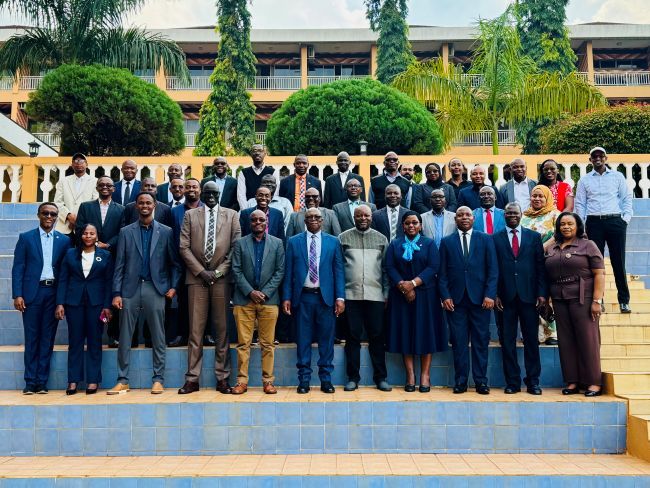
The validation of the strategy marks a transition from ambition to implementation. The next phase will focus on mobilising investment, strengthening institutions, and operationalising mechanisms to support implementation at scale.
Within this evolving landscape, the EAC AI Alliance, a regional platform guiding the operationalisation of the strategy, plays a central role by aligning stakeholders, mobilising partnerships, and supporting cross-sector implementation. It is implemented with the Inter-University Council for East Africa (IUCEA) and EASTECO, providing academic, research, and technical expertise across the region.
In partnership with the German Federal Ministry for Economic Cooperation and Development (BMZ), implemented through Deutsche Gesellschaft für Internationale Zusammenarbeit (GIZ), support focuses on strengthening key elements of a sustainable AI ecosystem, including skills, access to data and infrastructure, and enabling policy frameworks, combining global and local expertise for co-creation.
This momentum aligns with the broader vision of the African Union, whose Continental AI Strategy calls for the use of AI to support socio-economic development while strengthening data and digital sovereignty. Global frameworks such as the EU AI Act are also shaping standards for trustworthy and accountable AI, creating a benchmark and an opportunity for the region to align while adapting to its own context.