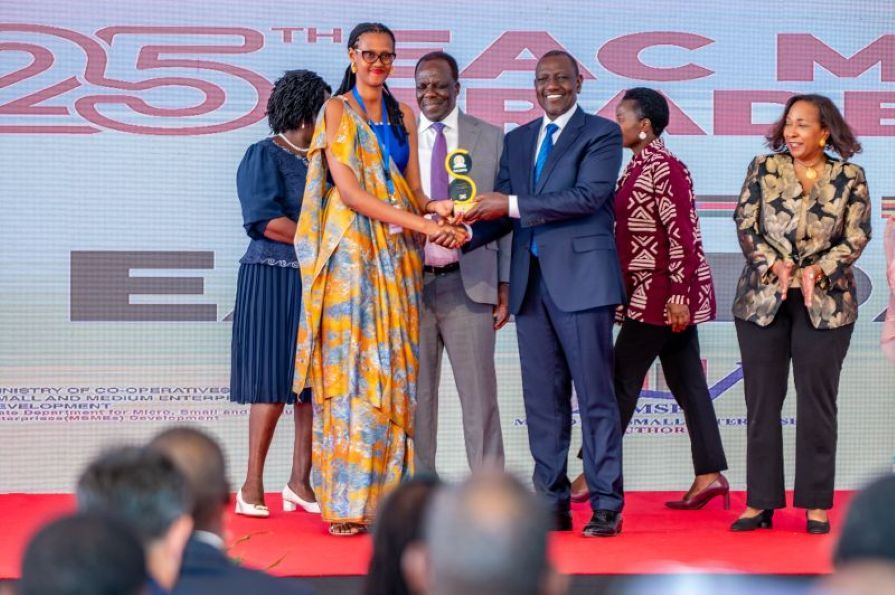
When Dative Uwimana founded Ikaze Ventures in 2021, she was not merely launching a tourism company. She was undertaking a deliberate act of national re-storying. In the aftermath of Burundi’s 2015 political crisis, when international narratives about the country were dominated by instability and fear, Dative made a conscious decision to use entrepreneurship as a tool to reclaim Burundi’s image – locally, regionally, and globally.
Born and raised in Bujumbura, Dative grew up immersed in the beauty of her country; the splendor of Lake Tanganyika, the countless rolling green hills, and a culture defined by a rich heritage, hospitality and warmth. Yet she also noted that Burundi’s tourism potential remained underexplored, constrained by political shocks and limited regional integration. “After 2015, people only heard negative stories about Burundi,” she recalls. “But I knew we were more than that. We are a country full of kindness, nature, and culture.”
Her journey into entrepreneurship was shaped by both conviction and visibility. Having been crowned Miss Popularity Burundi, Dative chose to transform public recognition into purpose. Rather than pursue conventional celebrity paths, she leveraged her platform to promote Burundi as a destination worthy of discovery. The choice of the name of her company was very intentional. Ikaze means Welcome. This was a declaration that Burundi was open again, ready to engage the region and the world on its own terms.
Building a Tourism Enterprise That Creates Opportunity
Ikaze Ventures began modestly, offering customised tourism experiences for local and international travelers. Dative initially operated as a solo entrepreneur, designing itineraries, guiding visitors herself, and coordinating logistics across Burundi’s cultural, historical, and natural sites. Over time, her enterprise expanded into a multi-service tourism and events company, providing cross-border tour packages, destination branding services, and tourism-oriented events.
Within four years, Ikaze Ventures recorded strong business growth, expanding from 2 to 10 staff members, engaging over 100 suppliers, and serving 15–20 institutional and corporate clients. Annual turnover grew from approximately 15 million Burundian francs in its early stages to 100–120 million Burundian francs over the last couple of years, reflecting rising demand for Burundi-centred and multi-country tourism experiences as well Ikaze’s success in the market.
Dative has embedded women’s empowerment at the heart of her business model. Having trained as a professional tour guide in 2018, she understands both the technical and cultural barriers women face in the tourism sector. “Tourism is not just for men,” she insists. “It’s a space for women to lead, innovate, and inspire.” Through Ikaze Ventures, she mentors and trains young women in guiding, customer care, storytelling, language skills, and digital marketing, helping them convert tourism into sustainable livelihoods.
Her social impact extends further. Through partnerships and community initiatives, Ikaze Ventures has contributed to the support of 81 Batwa children, linking tourism revenues to social inclusion and cultural preservation. This integration of enterprise and community responsibility reflects Dative’s belief that tourism must deliver benefits beyond profit. It must strengthen identity, dignity and create or open up opportunities.
Tourism as a Regional Trade in Practice
Dative Uwimana’s business thrives at the intersection of tourism and regional trade, making full use of East African Community frameworks that enable cross-border movement. Ikaze Ventures designs and sells multi-country itineraries connecting Burundi, Rwanda, Tanzania, and the Democratic Republic of Congo, positioning East Africa as a shared destination rather than fragmented markets.
Key to this model is the EAC Single Tourist Visa, which currently allows visitors to move seamlessly between Kenya, Uganda, and Rwanda. “The EAC visa is a game changer,” Dative explains. “ Clients love the idea that one visa lets them explore several countries.” She is a vocal advocate for the expansion of this regime to include Burundi, Tanzania, DRC, Somalia, and South Sudan.
Equally transformative has been the Tembea Nyumbani initiative, which encouraged East Africans to travel within the region. This campaign expanded Ikaze Ventures’ market base beyond international tourists to include regional travelers, strengthening intra-EAC tourism flows. However, Dative also speaks candidly about the fragility of regional integration. Periodic border closures between EAC Partner States directly disrupt tourism trade, undermining businesses built on cross-border cooperation. “It’s very hard to sell East Africa as one destination when borders close,” she notes. “We need open and stable routes for tourism to grow.”
Through participation in EAC Regional Tourism Fairs supported by GIZ-SEAMPEC project and capacity-building programmes supported by LIFTED, -a project co-financed by the German Federal Ministry for Economic Cooperation and Development (BMZ) and the European Union (EU), Dative has expanded her professional networks and deepened her understanding of regional trade frameworks. Her experience translates policy into practice, showing how women-led SMEs can operationalise integration when institutions work. And where they must improve.
Recognition, Vision, and the Power of Women’s Leadership
Being named a Woman in Trade Champion under the East African Women in Trade Champions Initiative (EAWiTCI) supported by LIFTED marked a turning point for Dative Uwimana. “I didn’t even know I could be nominated,” she admits. “It means that what we do as young women is being recognised. It reminds you of your vision when the journey feels hard.”
The recognition has elevated Ikaze Ventures’ visibility, opening new partnerships and acting as powerful, cost-free branding. “It is free publicity,” she says smiling. “People are learning that if they want to explore Burundi, they can come through us.” More importantly, it has reinforced Dative’s role as a mentor and role model. Through the EAWiTCI mentorship programme, she plans to support other women-led tourism enterprises in business management, marketing, sustainability, and regional networking.
Looking ahead, Dative envisions a future where women are not only participants in tourism but leaders shaping policy, narratives, and markets. She sees digital tourism, responsible travel, and cultural storytelling as key growth areas, alongside deeper regional collaboration. Her philosophy is rooted in faith and purpose. “Every woman was born as a gift to this world,” she says. “Don’t leave this world without giving that gift back.”
Through Ikaze Ventures, Dative Uwimana is redefining what it means to trade in tourism from Burundi – transforming travel into a vehicle for national pride, women’s economic empowerment, and East African integration. Her story embodies the promise of the EAWiTCI; that when women lead in trade, they do more than grow businesses. They reshape how communities view themselves and how the world engages with them.