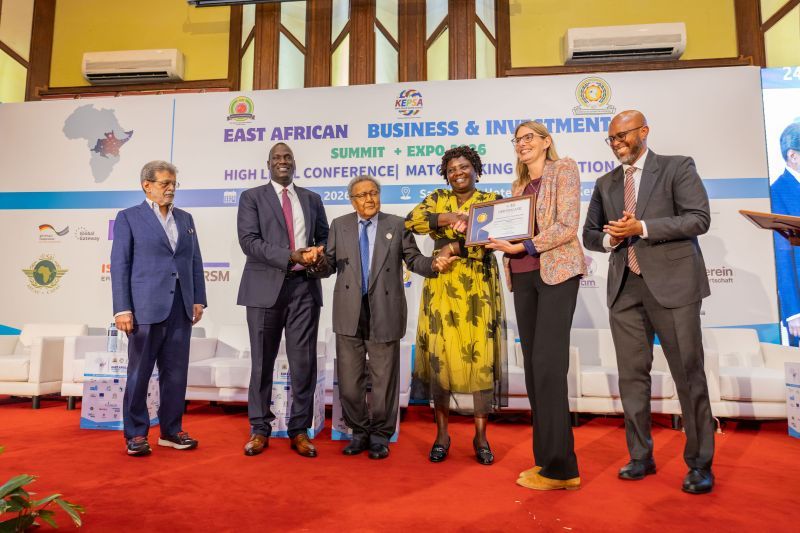
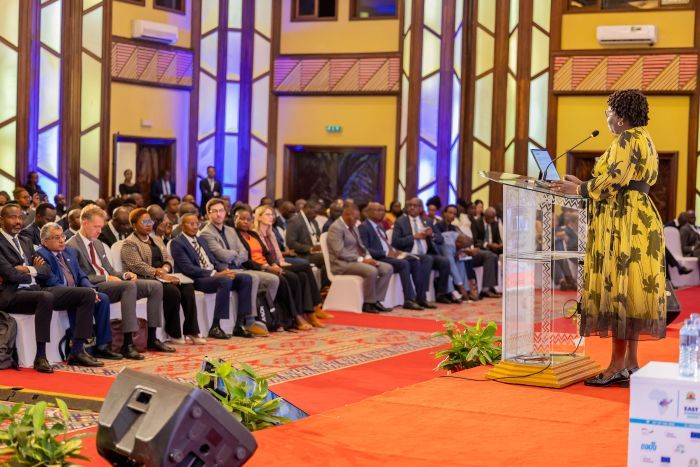
Hon. Beatrice Askul Moe, Chair of the EAC Council of Ministers and Cabinet Secretary, Ministry of EAC, ASALs and Regional Development, Republic of Kenya, officiated the East African Business & Investment Summit & Expo 2026 (EABIS 2026) that took place on 24 - 25 February 2026 in Nairobi.
The 2026 summit, supported through LIFTED — a project co-financed by the German Federal Ministry for Economic Cooperation and Development (BMZ) and the European Union (EU), and implemented by GIZ brought together over 300 participants -including ministers, business leaders, investors, development partners, and SMEs from across the region and beyond to discuss opportunities for promoting private sector-driven regional Integration for Increased Trade and Investments.
In her remarks, the Chief Guest, Hon. Beatrice Askul Moe, said: "Over the past two decades, the EAC has made great strides in harmonizing policies and regulations, and we have seen a commendable increase in intra-EAC trade. This summit provides an important platform for public and private sector collaboration. Reforms must translate into tangible results to build a prosperous, resilient, and integrated East African region."
Hon. John Lual Akol Akol, Chairperson of the East African Business Council (EABC), stated: "East Africa stands at a pivotal moment in its economic transformation. While intra-EAC trade has recorded encouraging growth, it remains below fifteen percent of our total trade—far from our shared target of forty percent by 2030. This Summit therefore calls us to move decisively from reform to results. The private sector urges Partner States to fully implement the Single Customs Territory, harmonize domestic taxes, eliminate non-tariff barriers, and uphold commitments under the Customs Union and Common Market Protocols."
Representing the EAC Secretary General, Ms. Annette Ssemuwemba Mutaawe, Deputy Secretary General, Customs, Trade and Monetary Affairs, stated: "The main challenge for intra-EAC trade is not policy, but implementation. The EAC Secretariat is committed to working with the private sector to remove barriers, enhance competitiveness, and build regional value chains. Technology will be a key catalyst to facilitate trade, improve market access, and accelerate regional integration."
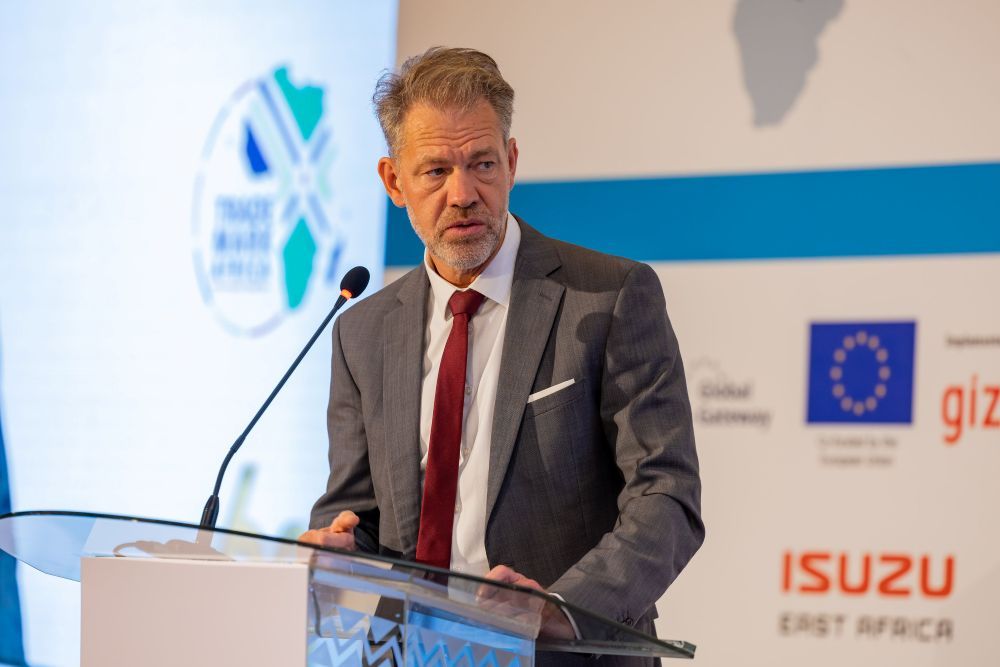
Mr. Alexander Fierley, Deputy German Ambassador to Kenya, said: "In a time of increasing global fragmentation, regional trade agreements create stability. A strong, integrated, rules-based East African market is in our shared interest. The EAC Economic Partnership Agreement with the European Union is more than a trade arrangement - it is a regional anchor that will strengthen East Africa as a single investment destination, provide long-term legal certainty, and ensure predictable market access to the EU. Germany remains your committed partner on this journey."
From the European Union perspective, Mr. Ondrej Simek, Deputy Head of Delegation of the European Union to Kenya, stated: "Over the past years, the European Union has worked closely with the East African Community (EAC) to promote regional integration and boost intra-African trade. The EU places great importance on easing the movement of professionals as a key driver of economic integration. Digital trade has become a powerful tool for competitiveness, innovation, and inclusion. It lowers barriers to market entry, expands opportunities for entrepreneurs, and connects firms to regional and global markets."
In his remarks Dr. Jas Bedi, EBS, MBS, Chairperson of the Kenya Private Sector Alliance (KEPSA) and EABC Vice-Chair, noted: "The private sector continues to face non-tariff barriers, regulatory inconsistencies, and unpredictable tax regimes. Addressing these challenges is not optional—it is essential for lowering the cost of doing business and strengthening investor confidence across East Africa. Investing in trade-enabling infrastructure, digital connectivity, and paperless customs systems will accelerate cross-border commerce and position East Africa as a globally competitive trade and investment hub."
Over 100 Exhibitors including East African textile, leather, and edible oil value chains showcased their products and will engage in B2B matchmaking sessions with counterparts from across the continent and beyond.
The Summit aims to position the EAC as Africa’s premier trade and investment hub while leveraging the digital economy as a driver of sustainable growth and inclusion. A communiqué outlining recommendations and resolutions from the Summit discussions will be presented by EABC to the Chairperson of the EAC Council of Ministers for consideration in policy decision-making.