The East African Community (EAC) has called for stronger regional collaboration and the development of regional value chains to unlock the productive potential of Micro, Small and Medium Enterprises (MSMEs), expand intra-regional trade and enhance access to continental and international markets.
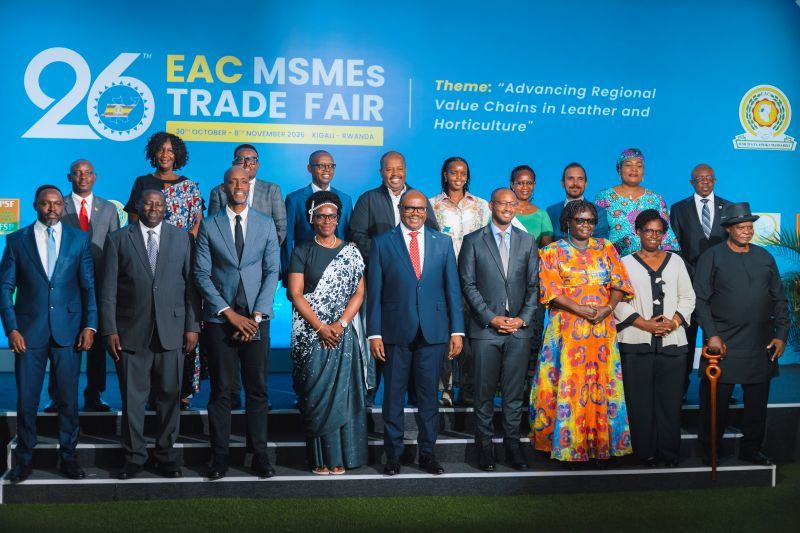
The call was made during the official opening of the 26th EAC MSMEs Trade Fair in Kigali, Rwanda on 3 November, where the Prime Minister of the Republic of Rwanda, Hon. Dr. Justin Nsengiyumva, underscored the critical role of MSMEs in job creation, innovation and economic development, particularly for women and young people. He, however, noted that enterprises across the region continue to face challenges, including limited access to affordable finance and markets, as well as the high costs associated with cross-border trade.
The Prime Minister urged Partner States and regional institutions to intensify efforts to eliminate non-tariff barriers, simplify customs procedures, improve transport and logistics infrastructure, and expand access to trade finance. He also highlighted the importance of digital platforms, e-commerce and interoperable payment systems in facilitating cross-border business transactions.
Highlighting Rwanda’s development ambitions, the Prime Minister cited the country’s target of creating 250,000 jobs annually and increasing non-traditional exports, including horticultural products, from US$1.4 billion to US$3.2 billion over five years. He emphasised that achieving these ambitions would require stronger regional cooperation and the effective integration of businesses and markets across the EAC.
“Our economies are linked and our markets are complementary. We go further by moving together,” he stated.
Addressing exhibitors and entrepreneurs, the Prime Minister reaffirmed the Government of Rwanda’s commitment to supporting MSMEs in overcoming operational and financial constraints and expanding their productive capacity. He encouraged businesses to engage with relevant government institutions and financial partners to access the support needed to sustain and grow their enterprises.
“We are here to work with you and with financial institutions to ensure that you can access funding and loans to sustain and grow your businesses. Count on us but also be ambitious. We want these MSMEs to grow beyond their current size and become major businesses,” he said.
Representing the EAC Secretary General, the Deputy Secretary General responsible for Customs, Trade and Monetary Affairs, Hon. Annette Mutaawe Ssemuwemba, described the Trade Fair as one of the Community’s longstanding people-centred platforms. She noted that, over the past 26 years, the event had evolved from a showcase for small-scale artisans into an important regional platform enabling entrepreneurs to exhibit their products, exchange experiences, establish business partnerships and access markets beyond their national borders.
Hon. Ssemuwemba observed that the Trade Fair has contributed to strengthening business linkages among Partner States, promoting locally manufactured products and creating opportunities for enterprise growth and value addition. She further welcomed the sector-based approach to organising exhibitors, noting its potential to foster collaboration among businesses and support the development of regional value chains.
“Over the years, the Fair has strengthened business linkages among Partner States, promoted locally made products and created opportunities for enterprise growth and value addition. By bringing sectors together, we believe this approach will contribute to strengthening the development of value chains, particularly in the sectors selected for future Trade Fairs,” she said.
The Deputy Secretary General also highlighted key achievements in regional trade facilitation, including the implementation of the EAC Single Customs Territory, which has reduced cargo transit time from 18 days to four days. She further noted progress towards implementing the EAC Cross-Border Payment System Master Plan, as well as the reported 44 per cent increase in EAC exports to the rest of Africa, reaching US$7.2 billion.
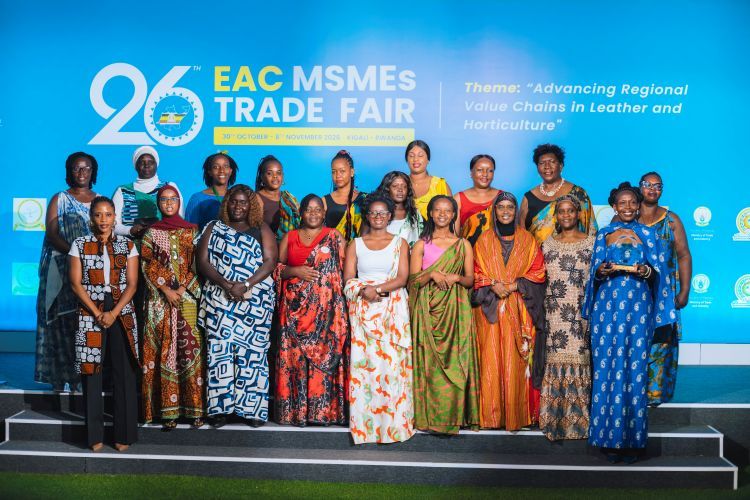
The Deputy Secretary General also recognised the sixteen women entrepreneurs honoured under the East African Women in Trade Champions Initiative for their leadership, innovation and contribution to advancing cross-border trade in the region. The recognition followed the successful completion of a six-month mentorship and capacity-development programme aimed at strengthening the champions’ understanding of EAC trade policies, regional market opportunities and cross-border trade procedures.
The Initiative brings together the EAC Secretariat, the East African Business Council (EABC) and the East African Women in Business Platform (EAWiBP), with support from GIZ through the LIFTED - a project jointly co-financed by the European Union (EU) and the German Federal Ministry for Economic Cooperation and Development (BMZ).
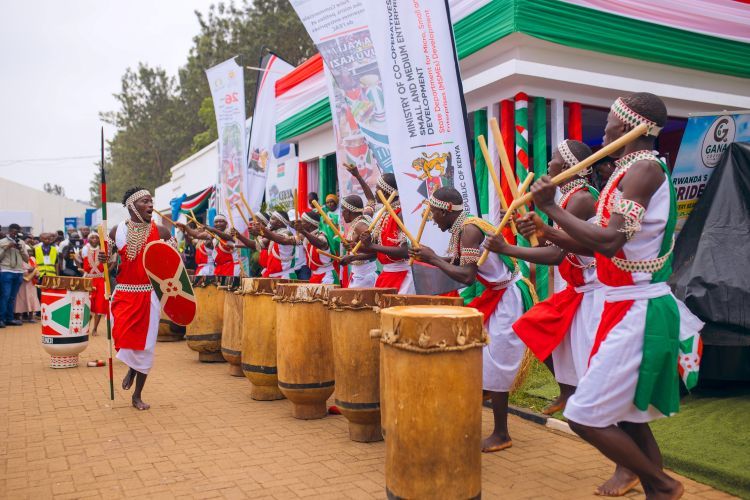
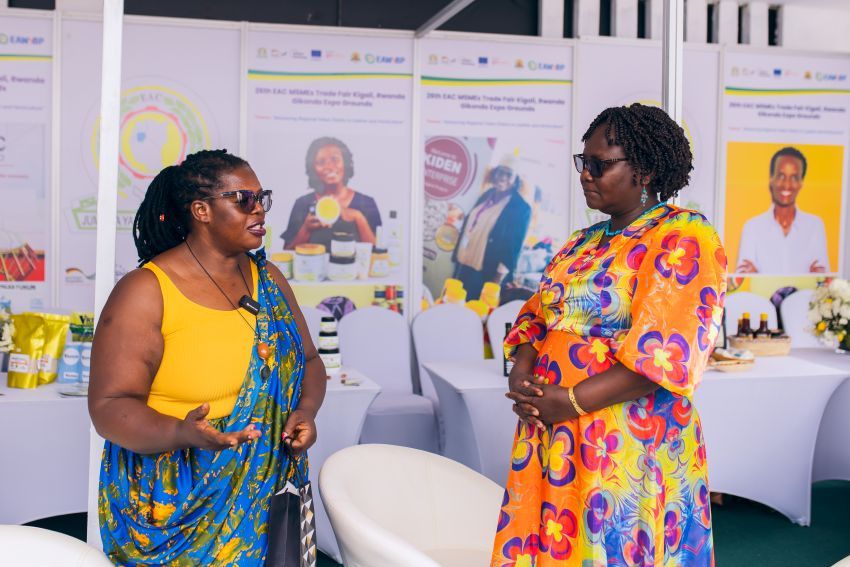
The 26th EAC MSMEs Trade Fair provides a platform for enterprises from across the eight EAC Partner States to showcase products and services, build business networks and explore opportunities for regional trade, investment and value-chain development.