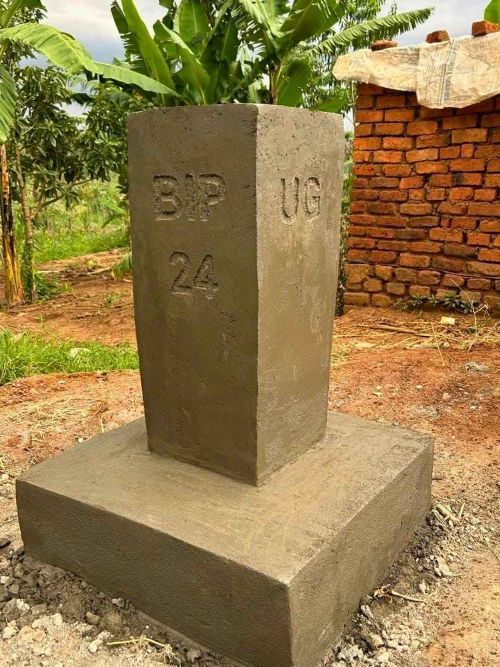
On the Kenya–Uganda border at Muluanda-Bunyide, the reaffirmation of a 50-kilometre stretch of the boundary is doing something bigger than marking land. It is laying the foundation for enhanced regional trade, peace and shared prosperity for border communities in Busia.
Border communities in the Muluanda-Bunyide area along the Kenya–Uganda border have waited approximately 18 years for the operationalisation of the Muluanda One Stop Border Post (OSBP), a specialised crossing point designed to streamline the movement of goods and people between Kenya and Uganda. The wait may be nearing an end, as the first step towards its operationalisation has begun: the joint reaffirmation of the Kenya–Uganda border in this area.
From 9 to 11 September, joint technical teams from Kenya and Uganda engaged border communities on both sides of the boundary in Busia with one key message: the reaffirmation of the Kenya–Uganda border in the Muluanda-Bunyide area was beginning, not to divide communities or disrupt their lives, but to pave the way for greater social and economic opportunities.
Delimitation defines a boundary in law and on maps, while demarcation marks it on the ground. Reaffirmation, the focus of this phase of the work, confirms the boundary line jointly so that both countries and their border communities share a common understanding of their respective administrative jurisdictions and territorial integrity. Through practical demonstrations of the reaffirmation process, the technical teams explained how the boundary is defined, marked and reaffirmed.
The teams responsible for the fieldwork were welcomed by the border communities. One message was reiterated by the joint technical teams: the border marks the limits of each country's administration; it does not divide neighbouring communities. The Samia people, for example, have a longstanding history of peaceful coexistence and interaction across the border. Their children can continue attending the same schools, families can maintain their social ties, and communities can continue pursuing shared economic activities such as farming, fishing and trade.
Along the River Sio, a transboundary river in Busia, residents welcomed the initiative, seeing it as a step towards facilitating the cross-border movement of goods and people. Residents in the area pay an average of UGX 2,000 to UGX 10,000 for each boat crossing to Kenya, with fares increasing during the rainy season.
Speaking to The Monitor, Mr Ibrahim Magemeso, Acting Commissioner in the Department of Surveys and Mapping in Kampala, stated that the border reaffirmation process was the first step towards establishing customs facilities and constructing a bridge across the River Sio.
According to Engineer Ireneous Barasa, cross-border trade in Samia dates back to the 1930s, when farmers crossed the River Sio to sell their cotton to ginneries on the Kenyan side. Trade in livestock and livestock products, as well as iron farm tools such as hoes, knives and pangas, also took place between border communities.
For East African citizens in the area, such as Mama Maria of Muluanda, the process has rekindled hope for deeper, people-centred regional integration that improves the lives of families and communities. The prospect of easier movement of goods and people represents an important step towards bringing the Muluanda One Stop Border Post closer to operationalisation.
The activity was supported by the Support to the African Union Border Programme (GIZ-AUBP), as part of the implementation of the African Union Border Programme (AUBP). The programme aims to strengthen the structural conflict prevention capacities of African Union Member States through border delimitation and demarcation, cross-border cooperation and capacity building.