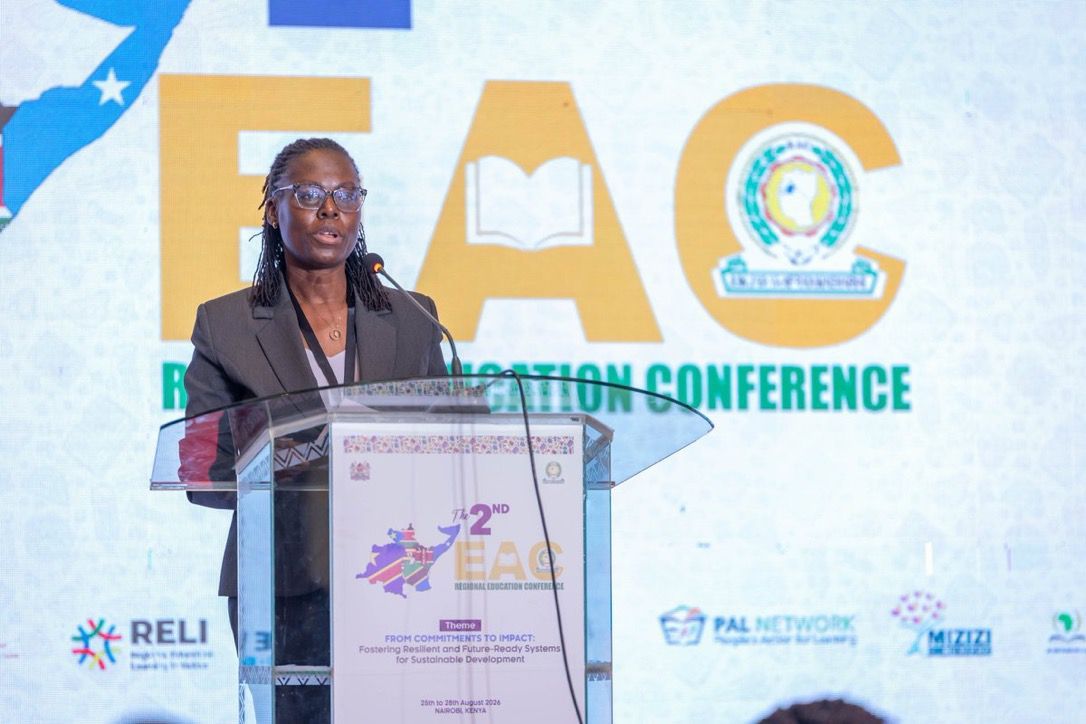
From 25 to 28 August 2026, governments, universities, development partners and industry leaders from across East Africa met in Nairobi for the 2nd East African Community (EAC) Regional Conference on Education to co-create practical approaches for harnessing Artificial Intelligence (AI) to strengthen education systems and improve learning opportunities across the region.
Held under the theme “Transforming Education in East Africa: From Commitments to Impact,” discussions focused on teacher development, digital learning, inclusion and education financing, and particularly on how AI can be responsibly integrated into the education ecosystem.
From AI awareness to institutional action
The EAC AI Alliance's contribution began even before the official conference opened. On 25 August, GIZ jointly convened a pre-conference workshop alongside UNESCO and IUCEA, titled “AI in Education: From Awareness to Responsible Institutional Optimisation.” The workshop brought together approximately 150 participants.
Designed around practical case studies, real-world scenarios and interactive discussions, the session explored how schools, universities and governments can adopt AI responsibly while managing emerging risks. Participants examined issues ranging from procurement and governance to ethics, data protection, bias and accountability.
With AI advancing faster than governance frameworks can keep up, discussions pointed to two urgent priorities: strengthening institutional safeguards, including transparency, explainability, bias testing and vendor accountability in AI procurement; and greater investment in local-language AI capabilities to ensure learners are not excluded from digital opportunities because of linguistic barriers.
Connecting academia, industry and government
On 26 August , a panel discussion held under theme “From Innovation to Impact: Bridging Academia, Industry and Government for AI-Driven Digital Transformation.”
The focus here was primarily on how East Africa can move beyond fragmented AI initiatives towards coordinated, measurable impact, and the roles that academia, government and industry need to play in getting there.
Panellists highlighted the potential of the EAC AI Declaration and Strategy to strengthen regional cooperation, including around financing and access to computing resources, while higher education institutions remain critical to developing AI talent and strengthening research collaboration. Industry also has an important role to play through investment in scholarships, mentorship programmes and portable credentials that can help connect skills development with opportunities.
With EASTECO, IUCEA, Microsoft and the Equity Group Foundation represented on the panel, the discussion brought these different roles together, reinforcing the need for regional standards and quality assurance mechanisms that can provide greater consistency across AI training programmes.
From regional discussions to shared commitments
Beyond the Alliance's engagements, the conference delivered important regional commitments. During a closed-door ministerial roundtable, Education Ministers from EAC Partner States agreed on key priorities, including increasing education financing toward a minimum benchmark of 20 percent of national budgets, strengthening teacher workforce development, establishing an EAC Community of Practice on education data to support cross-border research and harmonisation, and advancing national AI governance frameworks with stronger ethical and accountability standards.
Beyond this, it was agreed that technology strategies must remain inclusive, combining AI with lower-cost approaches such as radio, print and offline learning tools to reach underserved communities. This responds to the reality that many schools across the region still lack the reliable electricity, devices and internet connectivity required for effective digital learning.
Turning commitments into progress
The conference reflected strong political commitment to the region's education agenda, with participation from Kenya's Cabinet Secretary for EAC Affairs, Hon. Beatrice Askul Moe, representing President William Ruto, and Rt. Hon. Rebecca Alitwala Kadaga, First Deputy Prime Minister and Minister for East African Community Affairs of the Republic of Uganda and Chairperson of the EAC Council of Ministers.
Nearly 200 presentations across nine thematic areas demonstrated the breadth of work already underway across the region. With Uganda set to host the next conference in 2028, the focus now shifts to implementation — and the progress East Africa can demonstrate against the commitments made in Nairobi.