Professionals across the East African Community (EAC) region are keen to take advantage of common market opportunities in EAC Partner States and throughout Africa. Both the East African Community (EAC) and the Africa Continental Free Trade Area (ACFTA) aspire to creating a single market for services. One of the approaches to facilitate structured mobility of professionals across borders is through the signature of Mutual Recognition Agreements (MRAs), which enable service providers to practice in other Partner States without being subjected to duplicative qualification or licensing processes.
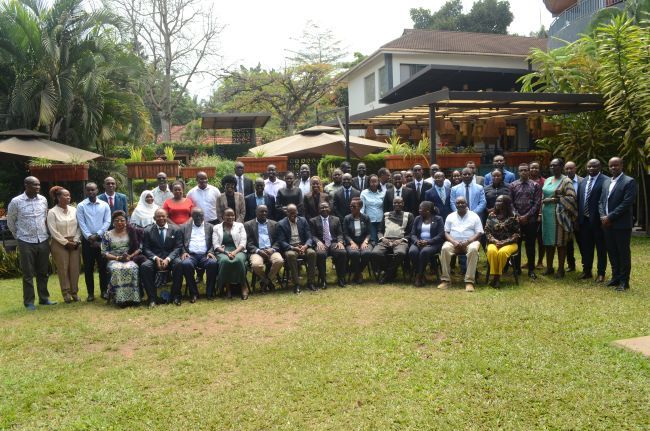
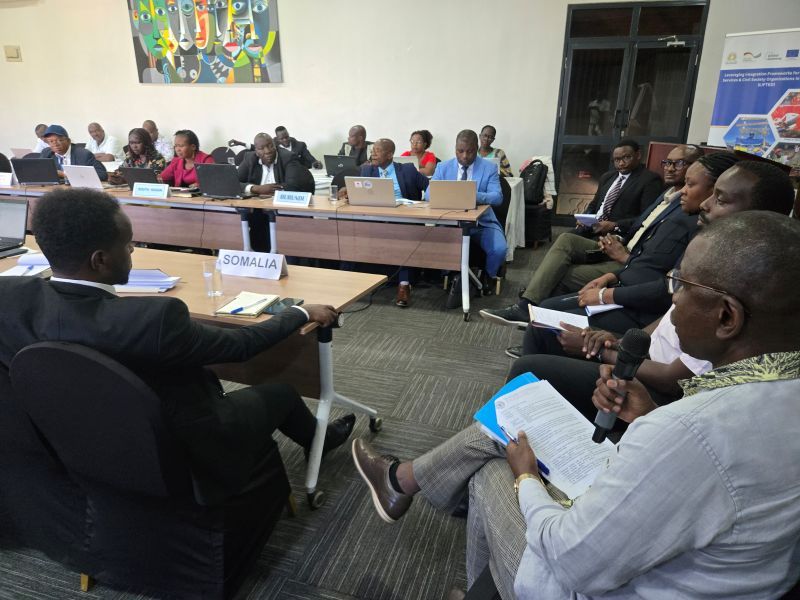
Policy makers, regulators, representatives of selected professional associations and service providers from the 8 EAC Partner States met in Kampala, Uganda to discuss the status of MRAs in the EAC and other Regional Economic Communities. Held between 24 and 26 November 2025, the event also presented an opportunity for sharing experiences and challenges in the implementation of existing EAC MRAs, and to build consensus on practical recommendations for EAC approaches to MRA negotiations in the framework of the AfCFTA. The engagement was supported by EU and BMZ and implemented by GIZ through 2 complementary projects-LIFTED and DIGEAT.
The representive from the EAC Secretariat recalled the 46th meeting of the Sectoral Council for Trade, Industry, Finance & Investment (SCTIFI) which directed Partner States to undertake an analysis to inform EAC positions for the AfCFTA MRA negotiations in service sectors. She observed that EAC had concluded MRAs for Accountancy, Engineering, Architectural & Veterinary professions, however, implementation was still a challenge due to procedural bottlenecks, varying regulatory capacity, lack of awareness and absence of a comprehensive regional oversight mechanism.
“When our economies recognise each other’s standards, certifications, and professional qualifications, we not only streamline trade and mobility—we also build a deeper foundation of confidence among our institutions and our people. Today’s meeting is an important step toward that vision.” She added.
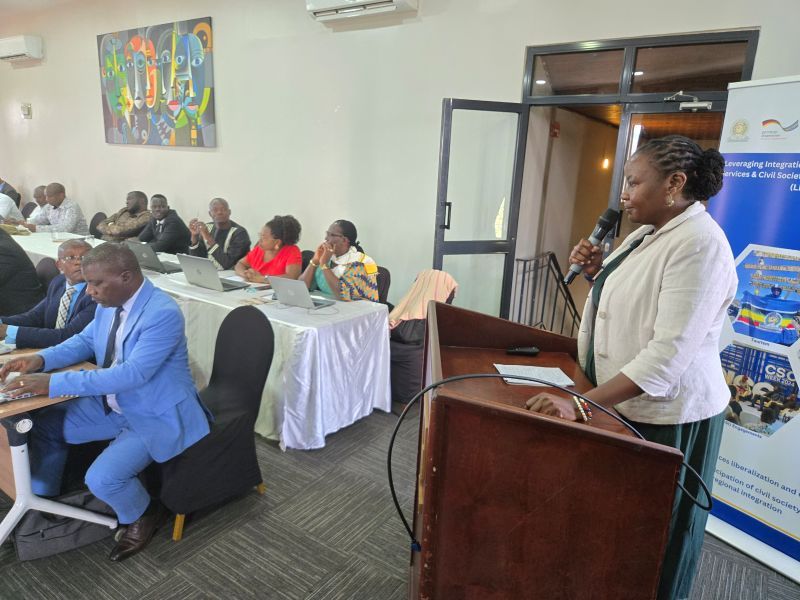
While making her remarks, Ms. Estella Aryada, the Component Lead - Trade in Services, EAC-GIZ Programme, reflected on the partnership between EAC and GIZ spanning over 25 years and noted that while priorities of the collaboration have kept on evolving based on mutually agreed priorities, trade has and remains core of the support.
Ms. Aryada highlighted GIZ support for the effective implementation of MRAs through streamlining the legal and regulatory framework, capacity building, advocacy and awareness creation. This complements support to the engineering MRA which focuses on addressing regulatory barriers to cross border mobility, and the establishment of a digital data exchange mechanism for smooth management of the process.
“While we are looking at movement of professionals across EAC region, we must be cognisant of the fact that mobility is global. It is important to find ways to position EAC and take advantage of opportunities that are outside the region.” She added.
On his part, Mr. Bramah Kaleve, Deputy Director, External Trade - Kenya, observed that AfCFTA Protocol covered Trade in Services and defined how services are traded. He noted that EAC developed a combined offer on the Schedule of Commitments under AfCFTA and so far, 22 offers have been adopted by the Council.
Mr. Kaleve highlighted that EAC came up with four regulatory frameworks including in financial and communication services which were under legal scrubbing while negotiations were currently ongoing on the frameworks for Tourism and Transport Services.
“In order to approach liberalisation of services, Article 10 of the Trade in Services Protocol requires negotiation of MRAs to enable supply of services. Therefore, I urge this meeting to prioritise on the analytical work on the MRAs.” He added.
Article 11 of the EAC Common Market Protocol mandates Partner States to mutually recognise academic and professional qualifications and to conclude Mutual Recognition Agreements for regulated professions. The EAC has concluded MRAs for Accountancy, Engineering, Architectural and Veterinary professions, while the MRA for Advocates is at an advanced stage. Work on additional professions such as land surveying, continues. At continental level, Article 10 of the AfCFTA Protocol on Trade in Services requires State Parties to negotiate MRAs and develop supporting guidelines.